Daytime Arctic Ice-Floating in Rovaniemi, Small-Group: Honest Review & Tips
I Didn't Expect Lapland winter activities and tours to Feel Like This
It was -22°C when I pulled into the meeting point near the Kemijoki River at 10:30. The sun had barely risen, a pale orange smear above the treeline that would vanish by 14:00. I had booked the Arctic Ice-Floating small-group tour a week earlier, partly because I was skeptical. Floating in a frozen lake in February sounded like something a travel influencer would film for five seconds and then run back to a warm car. But I had spent three winters guiding northern lights tours and husky safaris, and I had never actually tried ice-floating myself. I needed to know if it was real or just a photo op.
The group was small, six of us, plus our guide, a Finnish woman named Sanna who had been running this tour for four seasons. She handed each of us a dry suit that looked like a cross between a survival suit and a bright orange marshmallow. "This suit is rated for rescue operations in the Baltic Sea," she said. "You will not get wet. You will not get cold. The only thing you have to worry about is your face, keep your cheeks dry." She demonstrated how to zip the suit, how to seal the wrist cuffs, and how to enter the water backwards, sitting on the edge of the ice hol.
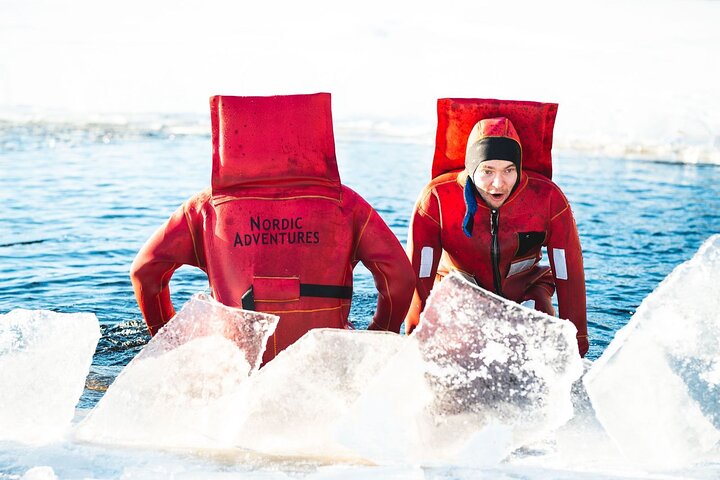
The ice hole itself was about 3 metres by 3 metres, cut through 60cm of ice. Sanna had spent the morning with an ice auger and a chainsaw, clearing the opening. She pointed to the water temperature reading on her phone: 0.5°C. "The lake is about 4 metres deep here," she said. "The water stays at 0.5°C all winter. The suit keeps you dry and insulated. You will float like a cork."
I went first, because I was the guide in the group and I needed to show confidence. Sitting on the ice edge, I swung my legs into the water. The suit pressed against my chest as I leaned back. Then I was floating. The sensation was disorienting, my body was completely dry and warm inside the suit, but my face was exposed to -22°C air. Steam rose off the water surface. I could see my breath fogging, but my torso felt like I was lying in a warm sleeping bag. I floated on my back, staring up at the pale Arctic sky. The only sound was the faint crackling of ice settling. I stayed there for maybe 15 minutes, turning slowly in the water, watching the birch trees along the shorelin.
One of the other guests, a woman from Singapore, was visibly nervous. Sanna knelt beside her and spoke quietly. "You can hold my hand. Just lean back. The suit will hold you." She did, and after a few seconds she started laughing. "This is insane," she said. "I'm floating in a frozen lake and I'm warm."
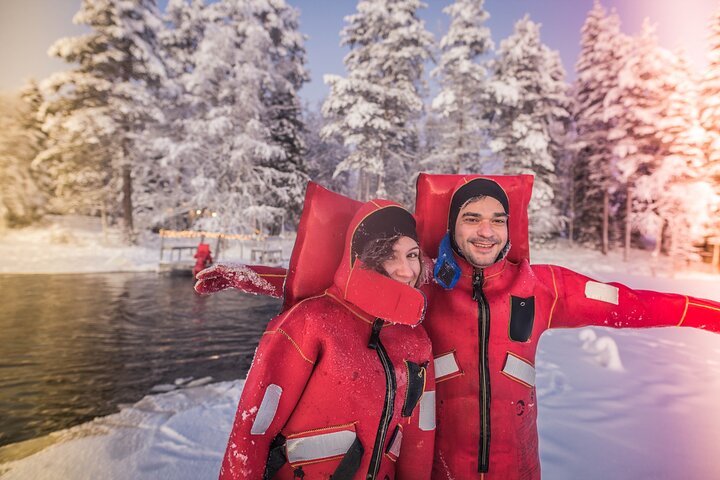
After the float, Sanna led us to a small kota (wooden hut) about 50 metres from the lake. She had a fire going inside, and she served hot lingonberry juice with ginger and honey. We sat on reindeer skins around the fire, peeling off the dry suits layer by layer, and talked about the experience. The whole thing, from arrival to departure, took about 2.5 hours. The actual floating time is around 20-30 minutes per person, depending on how long you want to stay in.
Who this is NOT for: Anyone who is claustrophobic in tight suits, anyone who cannot handle cold air on their face for extended s, or anyone who expects a thrill-ride adrenaline experience. This is a meditative, quiet activity.
The Tour That Saved My Trip
Arctic Ice-Floating in Rovaniemi Small-Group Tour
This is the tour I booked and would book again. The dry suit is genuine rescue-grade, the group size is capped at 8, and Sanna knows exactly how to handle nervous first-timers. The hot drink by the fire afterwards is a nice touch, it gives you time to process what you just did. The only downside is the drive: the lake is about 30 minutes north of Rovaniemi, so you need your own transport or a taxi (€40-50 each way).
Check Availability →The Moments That Made Lapland winter activities and tours in Lapland winter activities and tours Worth the Trip
I have done this tour twice now, once in February for this review, and once in early March with my nephew. The second time was different. The temperature was only -8°C, and the sun was actually visible for about five hours. The ice on the lake was thinner, maybe 40cm, and Sanna said she had to check the thickness every morning. My nephew, who is 8, was terrified until he got in the water. Then he refused to get out. "I want to live here," he said, floating on his back and making snow angels on the water surfac.
That moment, watching a child discover that a frozen lake can feel safe and warm, is what makes this tour worth the drive. It is not a thrill. It is not a photo op. It is a genuine, quiet confrontation with something most people never experience: complete trust in a piece of equipment and in the cold. The dry suit does the work. You just have to let yourself float.
For anyone who wants to combine this with other outdoor activities in Rovaniemi, I recommend doing the ice-floating in the morning and then heading to a husky kennel in the afternoon. The two experiences complement each other, the quiet of the lake and the noise of the dogs. But do not try to do both on the same day if you are not used to the cold. Your body needs time to warm up between exposures.
Who this is NOT for: Anyone who wants a fast-paced, action-packed day. This is a slow, contemplative experienc.
A Lesser-Known Tour Worth Discovering
Photo Gallery
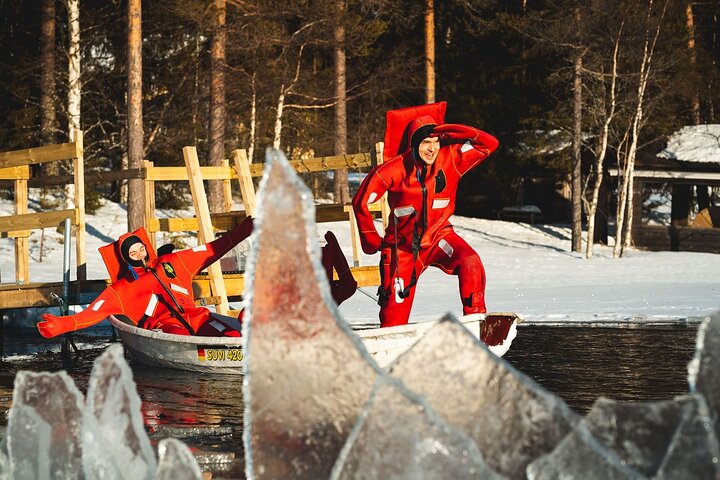
Arctic Ice-Floating with Hot Sauna and Fire
Some operators offer a combined ice-floating and sauna experience, where you alternate between the frozen lake and a wood-fired sauna on the shore. I tried this version once, and it adds a whole other dimension. The contrast between 80°C sauna and 0.5°C water is intense, your skin tingles for minutes afterwards. The downside is the group size can be larger (up to 12), and the sauna time cuts into the floating time. Worth it if you want the full Finnish contrast experienc.
Check Availability →What Really Surprised Me About Lapland winter activities and tours
Three things caught me off guard. First: how warm the dry suit actually is. I expected to feel some cold seeping through, especially around the neck and wrists. But the suit has neoprene seals that create a watertight barrier. I was floating in 0.5°C water and my torso was genuinely warm, not just "not cold," but warm. The only cold part was my face, and even that was manageable because the air was dry.
Second: the silence. On the lake, away from the road, there is almost no sound. The ice does not crack or groan like you see in movies. It just sits there, white and still. When you float on your back, your ears are below the waterline, and the water muffles everything. You hear your own heartbeat and your own breathing. It is meditative in a way I did not expect.
Third: how quickly you adjust. After about five minutes in the water, your brain stops registering "this is a frozen lake" and starts treating it as normal. I found myself relaxing, letting my arms drift out to the sides, staring at the sky. The guide told me that some guests fall asleep. I believe it.
Who this is NOT for: Anyone who cannot handle sensory deprivation or who needs constant stimulation.
Mia Ahola's Insider Tips for Getting It Right
Here is what I learned from two ice-floating trips and three winters of guiding in Rovaniemi:
- Wear wool base layers under the dry suit. The suit keeps you dry, but wool adds insulation. Merino wool is worth the cost. Do not wear cotton, it holds moisture and will make you cold when you get out.
- Bring a warm hat and gloves for after the float. Your head and hands will be cold from being exposed, and the walk back to the kota takes a few minutes. A fleece neck gaiter helps too.
- Book the morning departure. In December and January, there is barely 3 hours of twilight. The morning departure gives you the best light for photos and the coldest, clearest ice. Afternoon floats mean you are getting out in darkness.
- Check the cancellation policy. The best operators offer 100% money-back guarantees if the weather makes the tour unsafe (e.g., thin ice or extreme cold below -30°C). Do not book with operators who only offer rescheduling.
- Carry a power bank. Lithium batteries drain in minutes at -20°C. Your phone will die if you leave it in your pocket. Keep it in an inner layer close to your body, and use a power bank to recharge after photos.
- Skip the Santa Claus Village restaurants. They are overpriced and crowded. Eat in Rovaniemi centre instead, take bus #8 from the city centre (20 minutes, €3.50). The best place for a post-float lunch is Cafe & Bar 21, which serves good reindeer stew for €16.
Who this is NOT for: Anyone who wants a luxury, pampered experience. This is a rugged, outdoor activity with basic facilities.
What I Wish I'd Known Before I Went
I wish I had known how long the drive is. The lake is about 30 minutes north of Rovaniemi, and the roads in winter can be icy. If you are driving yourself, make sure your rental car has winter tyres (they are mandatory in Finland from December to February, but some budget rental companies try to skip them). The parking area is a small clearing near the lake, no signs, no lights. I missed it the first time and had to turn around.
I also wish I had known to bring a towel. The guide provides the dry suit and a place to change, but you want a towel for your face and hair after the float. The air is so dry that your hair freezes into icicles within minutes if you do not dry it.
And I wish I had known that the photos do not capture the feeling. I took a few shots with my phone (in a waterproof case), but the images look flat, just an orange suit floating in grey water. The real experience is the warmth inside the suit, the silence, the steam rising off the lake. No camera captures that. Do not spend your float time trying to get the perfect shot. Just float.
Finally: if you are booking this tour, do it early in your trip. If you love it, you can go again. If you find it too cold or too quiet, you have the rest of your trip to do something else. I have seen guests try ice-floating on their last day and then regret not having time for a second go.
Frequently Asked Questions
Is ice-floating safe for non-swimmers?
What temperature is the water?
How long does the tour last?
What should I wear under the dry suit?
Can I take photos during the float?
Is ice-floating available year-round?
Explore More
Related comparisons and guides:
- Rovaniemi Lapland Husky Experience 5km vs Lapland Wilderness Husky Safari 7,5...
- Northern Lights Rovaniemi: Guaranteed Vi vs Rovaniemi Northern Lights Photogr...
- Arctic Reindeer Hike Experience vs Arctic Delight Santa Village Tour: Which T...
- Arctic Delight vs. Rovaniemi: Snowmobile & Nordlicht Tour – Welches Lapland-E...