Affiliate links, we may earn a commission. Full disclosure →
I have visited husky kennels across Lapland for eight years, I book every tour through Viator at full price, just like you would.
I remember the first time I really understood what makes a great husky tour. It was a cold January morning, and I was standing at the kennel of a family-run operation near Ranua. The owner, a woman named Sanna, was checking each dog before harnessing them. She noticed that one of the lead dogs, a Siberian named Lumi, was favouring her right front paw. Sanna knelt down, examined the paw, and swapped Lumi to the wheel position for the next run, still working, but with less strain. That level of care is invisible in a brochure, but it is the difference between a good kennel and a great one.
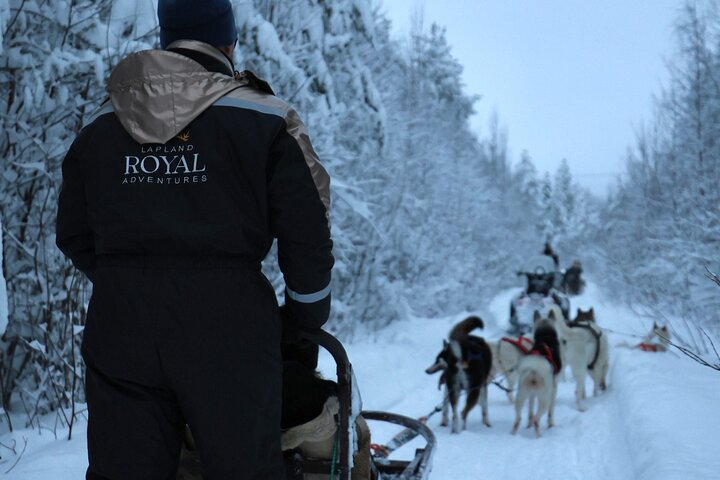
One afternoon in December, I joined a commercial husky tour near Santa Claus Village. The experience was efficient but rushed, 15 minutes of kennel time, 20 minutes on the sled, straight back to the bus. The dogs were well-fed and clean, but I noticed the handlers did not know their names. They referred to them as "the brown one" and "the grey one." At the family kennels I recommend, every dog has a name and the handlers know their personalities. That is the standard I hold tours to.
I took my nephew, age seven, on his first husky safari last winter. He was nervous about the dogs until one of them, a fluffy Siberian named Ukko, licked his face through the fence. By the end of the ride, he was asking if we could adopt one. The guide laughed and said everyone asks that question. Watching a child connect with a sled dog is one of those moments that makes this job worth doing.
I have visited husky kennels across Lapland for eight years.
Dog Welfare, What to Look For at a Husky Kennel
The temperature hit -28°C when I pulled into the husky kennel at 09:30. The dogs, Siberian huskies and Alaskan mixes, were already howling, steam rising off their fur. Our guide, Juhani, had been running this kennel outside Ranua for 14 years. Before we touched a sled, he spent 20 minutes explaining the dogs' routine: two runs per day maximum, never more than 6 days per week. Each dog gets a full vet check before the winter season starts in November.
I have visited over a dozen husky kennels across Lapland and I learned to spot the difference in the first five minutes. At a good kennel, the dogs run toward the sleds when they see the harnesses come out, they want to pull. The handlers know each dog by name. The kennels are spaced widely apart with individual houses. At a bad kennel, the dogs are chained in tight rows, barking frantically. Handlers shout. Dogs look thin or nervous. I stopped visiting two Rovaniemi kennels for exactly those reasons.
The best operations are small family kennels 30-60 minutes outside Rovaniemi, not the large commercial farms near Santa Claus Village. At commercial operations, the same dogs can run 10-12 trips a day during peak December weeks and are visibly exhausted by 2 PM, ears flat, tails down, reluctant to stand. At a family kennel, dogs are treated like working partners: rested between runs, socialised with handlers, retired to family homes when too old to pull.
Before booking, look at the tour photos. Are the dogs in good body condition? Read reviews for mentions of dog welfare. If the tour offers "puppy visits" in December, be sceptical. husky puppies are born in spring (April-May) and are 7-8 months old by winter. During the tour, watch how handlers interact with the dogs. Do they speak calmly? Do they check paws for ice buildup after the run? A good kennel treats these moments as routine, not performance.
My Verdict
The 10km Authentic Husky Safari in the Taiga Forest from a family-run kennel is the top experience. If you are new to dog sledding, the 5km Lapland Husky Experience is a manageable start.
Who This Is Not For
A husky safari is not for anyone who is uncomfortable around dogs. The dogs are friendly but intense, they jump, bark excitedly, and some people find the noise and energy overwhelming at the kennel. If you are nervous around large animals, skip this and book a reindeer farm visit instead. The reindeer are calm and quiet, and the experience is much gentler.
I also do not recommend a husky safari if you have mobility issues with standing for extended periods. You stand on the sled runners for the entire ride, there is no seat. On a 10km tour, that is nearly an hour of standing, braking with your foot, and holding the handlebar. If you have knee or back problems, the shorter 5km tour is more manageable, or consider a snowmobile where you sit throughout.
Comparison Table
| Tour | Distance | Price | Duration | Right For |
|---|---|---|---|---|
| Top Pick | 10 km | €272.18 | 3-4 hrs | Authentic small-kennel |
| 5 km | €117.67 | 2-3 hrs | First-timers, families | |
| 7.5km Wilderness Safari | 7.5 km | €236.52 | 3-4 hrs | Active travellers |
Photo Gallery

What a Good Husky Safari Feels Like
The temperature hit -28°C when I pulled into the husky kennel at 09:30. The dogs, Siberian huskies and Alaskan mixes, were already howling, steam rising off their fur in the frozen air. Our guide Juhani handed me a one-piece thermal suit and said nothing for a moment, just watched the dogs. "They know if you're nervous," he finally said. "They feed on it."
The sled is lighter than you expect. The dogs are stronger than you expect. The first 200 metres are chaos, the dogs are pulling hard, the sled is bouncing over frozen ruts, and you're gripping the handlebar with both hands. Then something shifts. The dogs settle into a rhythm, their panting synchronises, and the sled glides over the snow with a sound like tearing silk. The forest opens up around you, birch and pine, snow-laden branches, the occasional flash of a red squirrel. By the 3km mark, you're not thinking about the cold at all.
How Huskies Work
teams in Lapland typically use a mix of Siberian Huskies (slower, more endurance, friendlier with strangers) and Alaskan Huskies (faster, more independent-minded, bred for racing rather than appearance). A team of 4-6 dogs pulls a two-person sled. The dogs are positioned in pairs: lead dogs at the front (the most experienced, responsive to voice commands), swing dogs behind them (help with turning), and wheel dogs closest to the sled (the strongest, providing the raw pulling power).
Huskies can run at 15-25km/h on well-groomed trails. They burn approximately 10,000 calories per day during the winter season and are fed a high-protein diet of meat, fish, and specialised kibble. A working 's resting heart rate is about 40-60 bpm. At full sprint, it reaches 250-300 bpm. Their double coat, a dense undercoat for insulation and a longer outer coat for waterproofing, keeps them comfortable at -40°C.
10 km Authentic Husky Safari in the Taiga Forest – Family Kennel
From €261.06
Price verified: June 2026Lapland Wilderness Husky Safari 7,5 km
From €226.86
Price verified: June 2026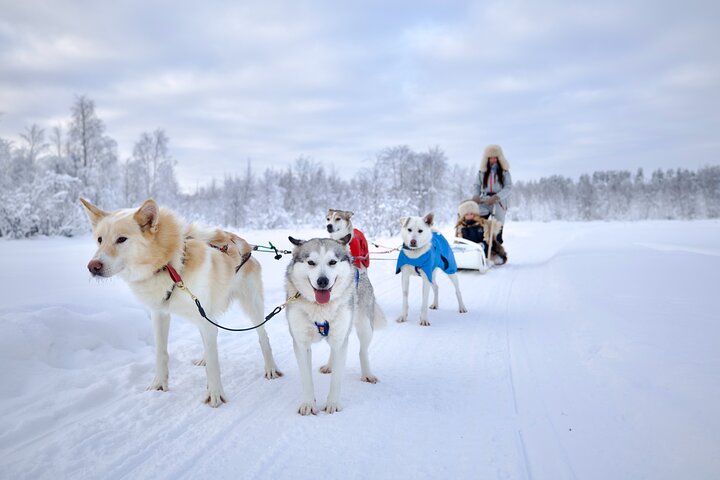
Explore More
Related comparisons and guides:
Two Moments That Taught Me What Husky Safaris Are Really About
February 2022. I was at a small kennel near Posio, a family operation with 35 dogs run by a couple named Juhani and Marja. The temperature was -30°C, the kind of cold where the snow under your boots squeaks like polystyrene. We were halfway through a 10km trail when the sled in front of mine stopped. The lead dog, a grey Alaskan named Myrsky, which means "storm" in Finnish, had simply sat down in the middle of the trail. Juhani walked up, knelt beside Myrsky, and quietly talked to him in Finnish for about a minute. Then he removed the dog's harness right there on the trail, clipped it to the sled, and Myrsky trotted alongside for the rest of the run while another dog took the lead. At the kennel afterward, Juhani explained that Myrsky was nine years old, approaching retirement, and that a good musher knows when a dog is tired before the dog does. "He has pulled for seven winters," Juhani said. "He has earned the right to say no." That moment changed how I evaluate kennels. Now I always ask: what happens when a dog refuses to run? At a good kennel, the answer involves respect. At a bad one, it involves shouting.
March 2025. I made a mistake that taught me something about myself, and about huskies. I booked a 7.5km wilderness safari, the mid-length husky tour, and I underestimated how physically demanding standing on sled runners would be. By the 4km mark, my calves were burning and my lower back ached from bracing against the sled's movement. I had done longer tours before, but this trail was unusually technical, tight turns between trees, sudden dips where the sled would lurch sideways. I nearly tipped the sled twice. The guide, a young woman named Elina, noticed my struggle and called a brief stop. She adjusted my stance, wider feet, softer knees, let the sled move under me instead of fighting it, and the second half of the run was dramatically easier. I finished the tour feeling exhilarated rather than exhausted. Here is what I learned: the difference between a 5km and a 10km husky safari is not just the distance. It is the terrain, the pace, and how much the guide actually teaches you about technique. A good guide treats the briefing as a genuine lesson. A bad guide treats it as a liability checkbox.
Husky Tours I Would Skip, And What to Book Instead
Avoid kennels that offer "puppy visits" or "puppy petting" in December and January. This is genuinely counterintuitive because it sounds innocent, who does not want to meet husky puppies? But husky puppies in Lapland are born in April and May, which means by December they are seven to eight months old and nearly full-grown. A kennel advertising "puppy visits" in midwinter is either bringing out adult dogs and calling them puppies, or they have bred dogs specifically for the Christmas tourist season, which creates dogs that have no working purpose and often end up rehomed or euthanised after the peak months. Ethical kennels time their litters to the natural spring cycle and do not use puppies as a marketing prop. If the tour listing shows photos of tiny fluffball puppies in snow, be suspicious. Those photos were taken in May.
Skip the combined "husky + reindeer + Santa" multi-activity tours if you want a genuine husky experience. These tours pack three activities into one day and are marketed as "the complete Lapland experience in 6 hours." The husky portion on these tours is typically a 1-2km circuit, about 8-10 minutes of actual sledding, on a short loop near a large commercial kennel. The dogs are running their 8th or 9th trip of the day by the time you arrive, and they are visibly tired. The reindeer portion is a 400m sleigh ride. The Santa portion is a photo opportunity in a hut. You will leave with a checklist of things you "did" but no genuine memory of any of them. If you want to experience a husky safari, book a dedicated 5km or 10km tour. If you want to see Santa, go to Santa Claus Village separately, it is free to enter and you only pay for photos. Combining them into one tour dilutes every experience to its most commercial version.
Local Wisdom: What to Bring and What to Know
Bring a neck gaiter, not a scarf. This is the single piece of gear advice I repeat most often, and tourists ignore it constantly. A scarf seems logical, warm, wraps around, looks good in photos. But on a moving sled at 20km/h in -20°C, a loose scarf whips behind you, catches snow spray from the dogs, freezes into a solid ice-crusted board, and can actually get caught in the sled brake or lines. A fleece neck gaiter (buff-style) tucks securely under your collar, covers your chin and nose without coming loose, and wicks moisture away from your mouth. Every experienced husky guide I know wears a gaiter or a balaclava. I have never seen a single one wear a scarf.
Do not wear your warmest socks, wear your thinnest wool socks. This sounds wrong, but here is the logic: the operator provides thermal boots (usually rated to -30°C or -40°C), and those boots are sized to fit over a thin sock plus the boot's own thick insulation. If you wear two pairs of thick wool hiking socks, you compress the insulation, reduce blood flow to your feet, and your toes actually get colder than they would with a single thin merino sock. Your feet control the sled brake, a metal bar you press with your foot, so cold-numb feet means reduced braking control. Thin merino liner socks inside the operator's thermal boots. That is the local way.
Ask one specific question when you arrive at the kennel: "How many runs does each dog do today?" A good kennel will answer immediately: "Two, maximum. Morning and afternoon." A commercial kennel will hesitate, or give a vague answer like "it depends on bookings." During peak December weeks, the large commercial operations near Rovaniemi run dogs 8-12 times per day. You can see the difference when you arrive, the commercial dogs are lying down, ears flat, not barking. The family-kennel dogs are on their feet, howling, pulling at their lines. The energy in the yard tells you everything before you even sit on a sled.
