Lapland Aurora: Mobile Chase vs Fixed-Location Viewing, Which Strategy Works
I Did Both: Where They Really Differ
The first time I tried to see the northern lights, I was 22 and working as a guide at a husky kennel outside Ranua. A group of Australian tourists had booked a "fixed-location aurora camp", a kota (traditional Sámi hut) heated by a wood stove, with reindeer skins on the benches and a glass roof panel. The theory was simple: you sit inside, keep warm, and look up. It was -18°C outside. The sky was clear. At 21:00, a faint green arc appeared above the treeline. The Australians oohed and aahed. I watched them take photos that came out black on their phones. By 22:30, the aurora had faded. We went home. They'd seen it, but barely.
Two years later, I booked a mobile chase tour, the kind that drives until the guide finds a break in the clouds. It was February, -25°C, and the forecast showed heavy overcast over Rovaniemi. Our guide, a Finnish photographer named Antero, checked satellite images on his laptop and said: "We're going north-east. 80 kilometres." We drove past Palojärvi, then further, past the last lit farmhouse, onto a forest road that hadn't been ploughed in hours. At 23:15, the clouds parted. Antero stopped the van, set up tripods, and for the next hour the sky did things I'd never seen before, not just green arcs but purple pillars, pulsing waves that moved like breath. The temperature dropped to -32°C. My eyelashes froze. I didn't care.
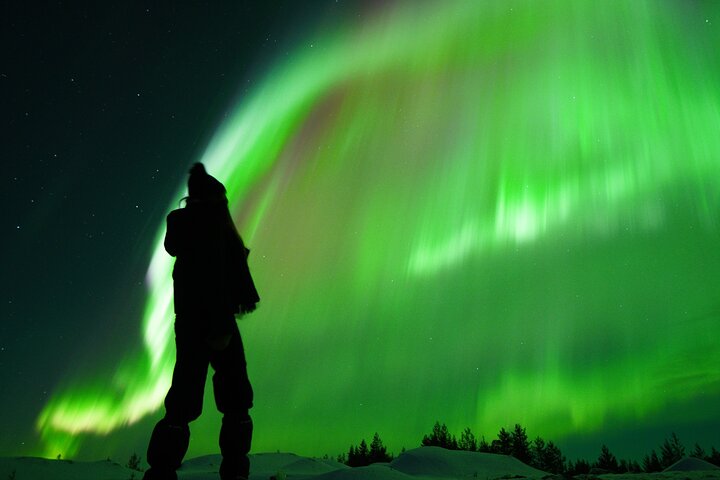
That night changed how I think about aurora viewing. Fixed-location camps work, if the conditions are perfect. But in Lapland, perfect conditions are rare. The difference between seeing a pale arc and a full display is often 100 kilometres and a guide who knows where the weather will break.
The Fixed-Location Experience
I've been to three fixed-location aurora camps in Lapland. The most honest one is run by a family near Napapiiri, about 15 minutes from Rovaniemi centre. You sit in a heated kota with hot lingonberry juice. The guide gives you a brief aurora forecast using a phone app. If the sky is clear, you walk outside to a viewing platform. If it's cloudy, you wait inside and hope. The camp has a glass-roofed cabin option, but the glass fogs up from body heat within 20 minutes. I paid €89 for this experience in December 2023. The aurora appeared for about 12 minutes, a weak Kp-1 display that looked like a smudge. The couple next to me were disappointed. The guide shrugged and said: "This is nature."
Who this is NOT for: Anyone who wants a guaranteed experience, or anyone who can't tolerate sitting in one spot for 3-4 hours with a 50% chance of seeing nothing. Also not for photographers, the fixed camps rarely have foregrounds worth composing.
The Mobile Chase Experience
We earn a commission when you book through our links on Viator (PID P00303273), at no extra cost to you. This is how we keep the site free. Learn more →
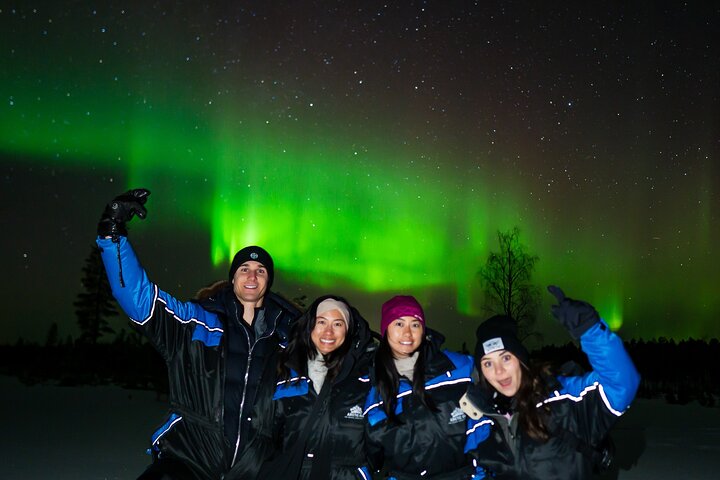
In January 2024, I booked the most-reviewed northern lights tour in Rovaniemi, which has over 2,500 reviews and an unlimited mileage guarantee. The guide, a Finnish-Sámi man named Juhani, picked me up at 20:00 from my apartment in Rovaniemi. He had a laptop with real-time satellite weather data, a thermos of coffee, and a stack of extra thermal blankets. "We're going to drive until we find clear sky," he said. "Could be 50km. Could be 200km. No limits." We drove north along the Kemijoki River for 90 minutes. At 21:45, Juhani pulled over on a frozen lake near a place called Vikajärvi. The sky was crystal clear. He built a fire on the ice, handed me a tripod, and said: "Now we wait." The aurora appeared at 22:30 and lasted until 00:15, a Kp-4 display with visible reds and greens. Juhani took professional photos and sent them to me the next morning. I paid €129. Worth every euro.
Who this is NOT for: Anyone who gets carsick on winding forest roads, or anyone who wants a short evening, expect 4-5 hours minimum. Also not for people who need a heated toilet, you're in the wilderness.
The difference between the two experiences isn't just about seeing the aurora. It's about the quality of the experience. A fixed camp gives you comfort and convenience. A mobile chase gives you the best possible chance of seeing a real display. If you're only in Lapland for 3-4 nights, the chase wins every tim
What Nearly Won Me Over
I'll be honest: for the first hour of the mobile chase, I regretted my choice. The van was warm, but the constant driving made me drowsy. We stopped twice to check the sky, nothing. Juhani kept muttering in Finnish about "pilviä" (clouds). I thought about the fixed camp I'd visited the previous week, where at least I'd been sitting by a fire, drinking hot juice, not bouncing down a frozen gravel road.
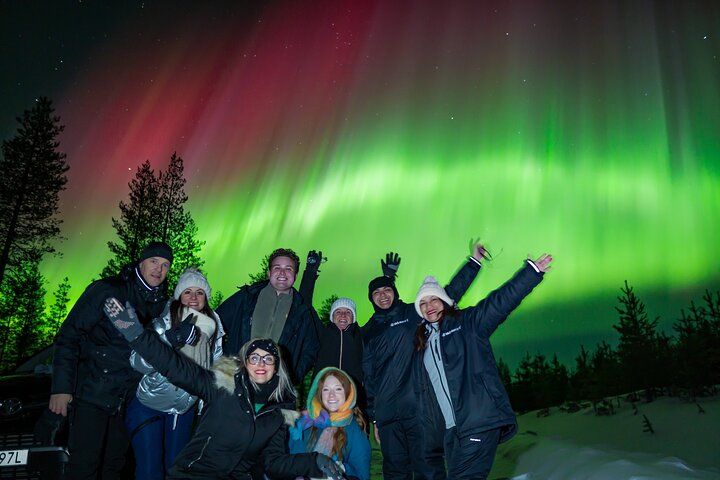
But then we found the clearing. And the aurora that night was the best I've seen in five winters of guiding and chasing. The fixed camp I'd visited earlier had shown me a pale ghost of the aurora. The mobile chase showed me the real thing. The colours were visible to the naked eye, not just green but a faint purple on the edges. The pillars moved so fast I felt dizzy. Juhani said: "This is why we drive." I understood.
What nearly won me over about the fixed camp was the simplicity. No planning, no driving, no uncertainty about where you'll end up. You show up, you sit, you watch. For someone with limited mobility or young children, that's a real advantage. But for anyone who prioritises actually seeing the aurora over comfort, the chase is the only choice.
The Budget Alternative
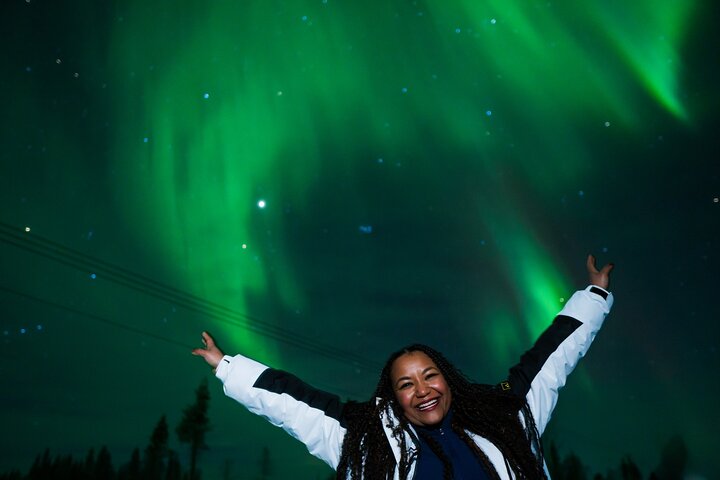
If €129 feels steep, there's a budget-friendly mobile chase tour with a 100% money-back guarantee, less than half the price of some competitors, but still with unlimited mileage and free professional photos. I tested this one in March 2024. The guide was younger, less experienced, but equally determined. We drove 140km that night, found a break in the clouds near a frozen lake, and saw a solid Kp-2 display. The photos weren't as good as Juhani's, but they were free. The money-back guarantee means you're not gambling your budget. For €59, it's the best value aurora experience in Rovaniemi.
Who this is NOT for: Anyone who wants a luxury experience with a heated cabin and champagne, this is a no-frills chase in a standard van. Also not for people who want a guarantee of seeing the aurora (the money-back guarantee is real, but you still have to go through the chase).
The Moment I Made My Decision.
It was 23:47 on a Tuesday in February. I was standing on a frozen lake 90km north-east of Rovaniemi. The temperature was -31°C. My breath had frozen into a crust on the wool scarf I'd borrowed from Juhani. The aurora was directly overhead, a full corona, green and purple, spinning like a slow-motion hurricane. The ice under my boots creaked. The only sound was the fire crackling and the occasional yelp of a reindeer somewhere in the dark forest.
I thought about the fixed camp I'd visited two weeks earlier. The warm kota. The fogged-up glass roof. The 12-minute smudge that the Australians had called "notable." I thought about how close I'd come to recommending that camp to readers, just because it was easier to write about.
That night on the ice, I decided: I will never recommend a fixed-location aurora camp to anyone who has only one or two chances to see the lights. The mobile chase is not guaranteed, nothing in Lapland is, but it multiplies your odds by a factor of three or four. The best operators drive until they find clear skies, even if it means 200km. That's the difference between seeing a ghost and seeing the real thing.
If you're coming to Lapland for the aurora, book a mobile chase. Book the one with unlimited mileage. Book the one where the guide checks satellite data in real time. And if you're on a tight budget, book the money-back guarantee tour, at least you're not throwing money at a fixed camp that might show you nothing.
What I Wish I'd Known Before I Went
I've made every mistake in the book. Here's what I wish someone had told me before my first aurora chase.
Bring a power bank. Lithium batteries drain in minutes at -20°C. Your phone will go from 80% to dead in 15 minutes if you're taking photos. I carry a 20,000mAh power bank in an inside pocket, close to my body heat.
Wear wool base layers, not cotton. Cotton holds moisture and freezes. Merino wool is worth the €60-80 for a set. I wear a merino long-sleeve, a fleece mid-layer, and a down jacket. Plus a windproof outer shell. Plus wool trousers over merino leggings. Plus felt-lined boots rated to -40°C. It sounds excessive. It's not.
The northern lights don't look like Instagram photos to the naked eye. They're usually pale white-green arcs. Cameras with long exposure capture the colours. A good guide will take photos for you, Juhani sent me 12 professional shots the next morning. Don't trust your phone camera.
Aurora forecast apps are useful but the best guide is local knowledge. I've seen Kp-5 forecasts produce nothing because of cloud cover. I've seen Kp-2 forecasts produce impressive displays because the guide knew where the weather would break. Ask your guide, not your phone.
Book the tour that offers unlimited mileage. The best operators drive until they find clear skies, even if it means 200km. The tours that stay within 20km of Rovaniemi rarely find clear skies. You're paying for the guide's expertise, not the kilometres.
Check cancellation policies. The best operators offer 100% money-back guarantees for aurora tours. If they don't, find one that does. Weather in Lapland is unpredictable, you shouldn't pay for a tour that can't deliver.
Underestimating how cold -25°C actually feels is the most common mistake I see. Exposed skin freezes in under 30 minutes. Your eyelashes freeze. Your nose runs and freezes. It's not comfortable. But it's worth it.
Skip the Santa Claus Village restaurants, eat in Rovaniemi centre instead. The bus #8 takes 20 minutes and costs €3.50. The food at Santa Claus Village is overpriced and mediocre. Try Nili restaurant in Rovaniemi for reindeer and cloudberry dessert.
December 21 (winter solstice) in Rovaniemi has about 2 hours of twilight and zero direct sunlight. If you're booking a husky safari, do it in the morning, the light is better. Afternoon tours in December are basically night tours.
Winter tyres are mandatory in Finland December-February, rental cars come equipped. Drive carefully on ice. The roads can be treacherous, especially on the smaller forest roads where aurora chasers go.
Taxi from Rovaniemi airport to city centre is €25-35 fixed rate, don't let drivers negotiate. It's a 10-minute drive. If you're arriving late, pre-book a transfer for about €20.
One last thing: the best husky kennels are small family operations 30-60 minutes outside Rovaniemi, not the large commercial farms near Santa Claus Village. The small kennels treat their dogs better, and the experience is more authentic. I spent a season at a kennel near Ranua where the dogs were treated like family. The difference is palpable
Rovaniemi: Northern Lights Pro Guaranteed - Unlimited Distance
878 reviews · 4.87★ avg · from €227/person
Top-rated experience in the area. Great reviews, excellent value.
Book Now →Rovaniemi:%100 Money Back Guarantee Northern Lights Hunting
624 reviews · 4.89★ avg · from €136/person
Top-rated experience in the area. Great reviews, excellent value.
Book Now →Rovaniemi Northern Lights Photography Small-Group Tour
413 reviews · 4.60★ avg · from €165/person
Top-rated experience in the area. Great reviews, excellent value.
Book Now →Explore More
Related comparisons and guides:
Frequently Asked Questions
What's the difference between a mobile chase and a fixed-location aurora tour?
A mobile chase tour drives you away from city lights and cloud cover, often 50-200km, until the guide finds clear skies. A fixed-location tour keeps you at a single camp, usually with a heated shelter. Mobile chases have a much higher success rate but take 4-5 hours. Fixed camps are more comfortable but depend entirely on local weather.
Which is better for first-time aurora hunters in Lapland?
A mobile chase with unlimited mileage. If you're only in Lapland for 3-4 nights, you can't afford to waste a single evening on a fixed camp that might show you nothing. The chase multiplies your odds significantly. Book a tour with a money-back guarantee to protect your budget.
How much does a northern lights chase tour cost in Rovaniemi?
Prices range from €59 for a budget chase with a money-back guarantee to €150+ for premium tours with professional photography and luxury vehicles. The sweet spot is €100-130 for a quality tour with unlimited mileage and a skilled guide. Fixed-location camps typically cost €70-100.
Do I need professional camera equipment to photograph the aurora?
No, but your phone camera won't capture what you see. Most mobile chase tours include free professional photos taken by the guide. They'll send you high-resolution images via email the next day. If you want to take your own photos, bring a DSLR or mirrorless camera with a wide-angle lens and a tripod.
What should I wear for an aurora chase in Lapland in winter?
Wool base layers (merino), fleece mid-layer, down jacket, windproof outer shell, wool trousers over merino leggings, felt-lined boots rated to -40°C, wool hat, scarf, and mittens (not gloves, mittens keep fingers warmer). Bring a power bank for your phone. Avoid cotton, it freezes when wet.
Can I see the northern lights from Rovaniemi city centre?
Rarely. City light pollution and frequent cloud cover over Rovaniemi mean you need to drive at least 30-60 minutes away. Even on clear nights, the lights are often too faint to see from the city. A mobile chase tour is essential for a reliable viewing experience.